
.png?width=800&height=450&name=Untitled%20design%20(20).png)
Quick Links
Summary
The "Silver Tsunami" is more than a retirement trend. It's a stress test for American small businesses. Many companies in the $3M–$50M range are currently built on the owner's personal handshakes and relationships rather than on a repeatable engine.
If your growth depends on you being in every room, you don’t have a business, you have a high-paying job with a lot of overhead.
To survive the transition, owners must move beyond "hero-led" operations and build a framework where the brand identity and revenue engine exist independently of the founder.
I recently read an article in Fox Business about the "Silver Tsunami.The wave of baby boomer business owners preparing to exit the stage.” One detail stood out to me: a painting company that did 85% of its business through repeat customers and word-of-mouth without spending a single dollar on marketing.
On the surface, that sounds like a dream. In reality, it’s a nightmare for anyone looking to exit. As a battle-tested operator, I see both a successful company and a relational risk.
The Handshake Trap
Most of these businesses are successful because the owner is a force of nature. They’ve spent thirty years keeping customers happy and building trust through sheer personality. But here is the hard truth: if your brand is tied to your face and your personal cell phone number, you’ve fallen into the Handshake Trap.
When that owner retires, the company's core strength doesn't stay behind in a manual. It walks out the door with them.
To fix this, you have to move beyond the "hero" phase. Real growth is rooted in a repeatable system to find and win Must-Have Customers without you having to be in every sales meeting. If your success can’t be replicated unless you’re personally pulling the strings, you haven't actually built a business asset; you’ve just built a very expensive tether.
Is Your Vehicle Built for the Next Race?
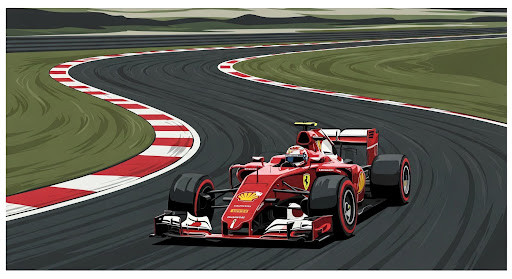
I often compare a business strategy to a race car. Many boomer-led businesses are like Vintage Ferraris. They are beautiful, powerful, and meticulously maintained, but they require a "very specific driver" who knows exactly how to tickle the gears to make them run.
If you want to sell your business or pass it to the next generation, you need to hand over a vehicle that any pit crew can drive to a win. That requires shifting from "historical inertia", the dangerous assumption that next year’s customers will behave exactly like last year’s, to a data-driven system.
You have to ask the tough questions:
- Does our product stand on its own in the market, or is it propped up by my personal relationships?
- Are we moving customer insights out of my head and into a system that the team can actually use?
Stop Guessing, Start Verifying
Succession isn't just a legal or financial handoff; it’s a strategic one. The next generation of owners won’t have your thirty years of handshakes to fall back on. They need a Revenue Engine fueled by verifiable customer reality, not just the founder's intuition.
Use Start, Stop, Continue to get started
- START: Auditing your "Relational Risk." Identify every major account that stays solely because of a personal relationship with you. Begin transitioning those touchpoints to your team immediately.
- STOP: Relying on owner focused word-of-mouth as a primary marketing strategy. Take it as a compliment, but recognize it is not a scalable system. It’s passive growth, and passivity is a liability during a sale.
- CONTINUE: Delivering the high-quality service that built your reputation, but start documenting the "why" and "how" so it becomes a permanent part of your Execution and Accountability Framework.
Don’t let your business be a "long goodbye." Let’s build a legacy that can run—and win—without you.
Not sure if your "vehicle" is ready for the handoff? As a fellow business owner, I’m always down to grab a coffee (virtually or in person) and chat about how to move your business forward. No strings attached—just a straight conversation between operators.
.jpg)